
11 Tips to Hire the Best Criminal Lawyer for Your Case
Learn how to hire the best criminal lawyer for your case with 11 practical tips covering legal experience, Bar Council verification, court proceedings, bail, fees, and professional ethics.
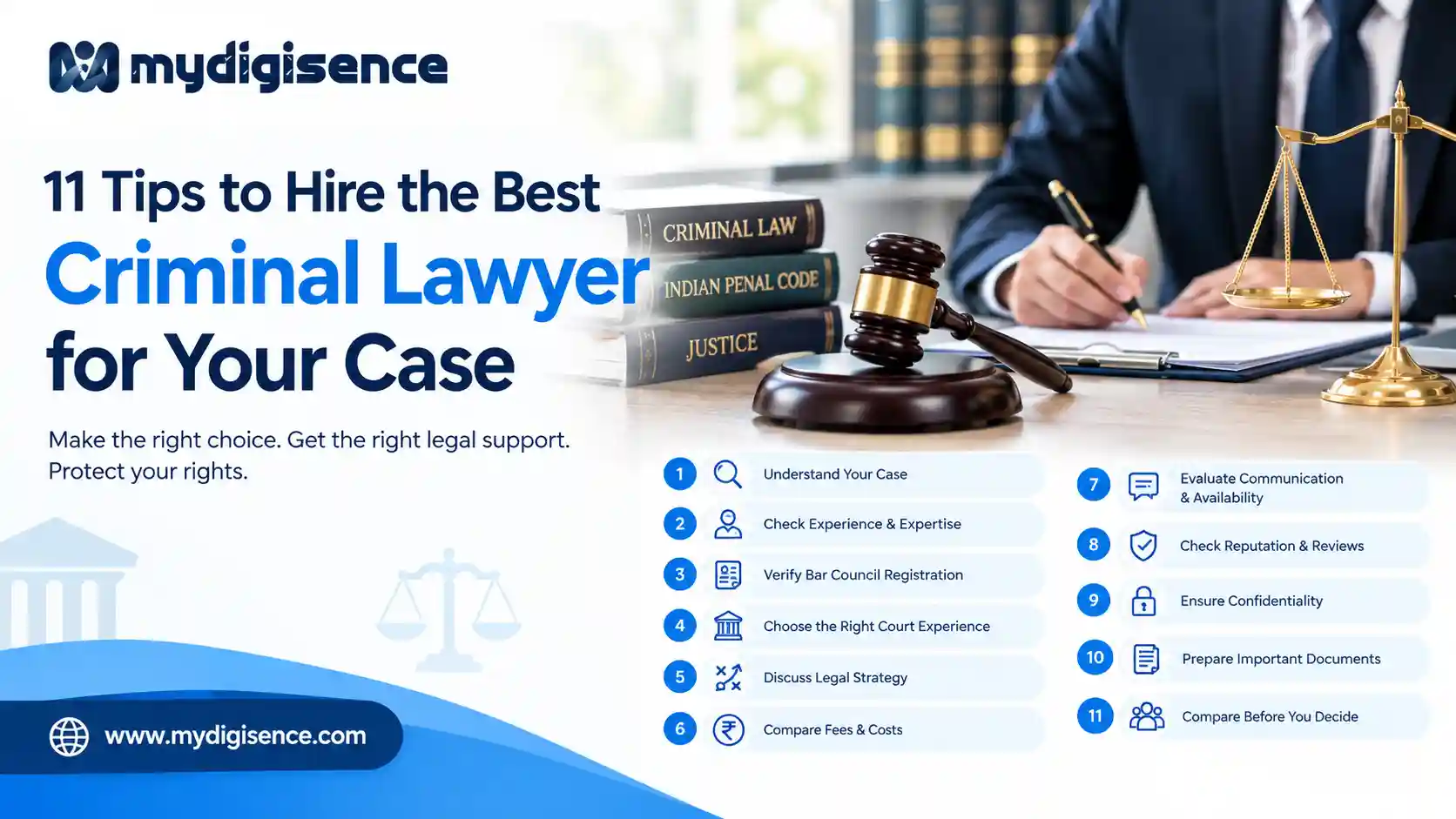
Facing criminal charges, receiving a police notice, or dealing with an FIR can be stressful. Choosing the right legal professional is one of the most important decisions you can make to understand your rights and prepare an appropriate legal response.
If you want to hire the best criminal lawyer for your case, focus on relevant criminal law experience, court practice, professional credentials, communication, and transparent legal fees rather than popularity alone.
Whether your case involves bail, cybercrime, fraud, assault, theft, or another criminal allegation, this guide explains 11 practical tips to help you choose a suitable criminal defence lawyer in India.
Quick Answer: How to Hire the Best Criminal Lawyer for Your Case?
To hire the best criminal lawyer for your case, choose an advocate with relevant criminal law experience, verify their State Bar Council enrolment, check their experience in the appropriate court, discuss your legal situation, understand their proposed strategy, and confirm fees before engagement. Ask about bail procedures, FIR-related matters, trial experience, communication, confidentiality, and possible legal outcomes. A suitable criminal lawyer should explain your rights, identify legal risks, and provide realistic guidance without guaranteeing a result.
Key Takeaways
Relevant experience matters: Choose a lawyer who has handled criminal matters similar to yours.
Verify professional credentials: Check State Bar Council enrolment before hiring.
Understand your case: Determine whether you need help with bail, investigation, trial, appeal, or another criminal proceeding.
Compare legal fees: Clarify consultation, drafting, hearing, and additional expenses.
Ask about court experience: Familiarity with the relevant court and procedure is important.
Avoid guaranteed outcomes: No responsible lawyer can promise an acquittal or guaranteed bail.
Prioritize confidentiality: Choose a professional who handles sensitive information carefully.
1. Identify the Type of Criminal Case You Are Facing
Before hiring a criminal lawyer, understand the nature of your legal problem.
Criminal law covers many different offences and legal procedures. An advocate experienced in one category may not have the same level of experience in another.
Common criminal matters include:
Theft, robbery, and property-related offences
Cheating, fraud, and financial crimes
Cybercrime and online fraud
Assault and other offences involving violence
Domestic violence-related criminal proceedings
Drug-related offences under the NDPS Act
Cases involving allegations under the POCSO Act
Bail and anticipatory bail applications
Criminal appeals and revisions
Hiring tip: Explain your legal situation clearly and ask whether the advocate has experience with similar allegations and proceedings.
2. Look for Relevant Criminal Law Experience
Experience is an important consideration when selecting a criminal defence lawyer.
However, the number of years an advocate has practised does not automatically determine their suitability.
A lawyer with relevant experience in criminal investigations, bail applications, evidence examination, witness questioning, and criminal trials may be better suited to your particular matter.
Ask questions such as:
Have you handled criminal cases involving similar allegations?
What stages of criminal proceedings do you regularly handle?
Do you have experience with bail hearings and criminal trials?
Which courts do you regularly appear before?
Look for clear explanations rather than unsupported claims about success rates.
3. Verify the Lawyer's Bar Council Registration
Before hiring a criminal lawyer in India, check whether the person is appropriately enrolled and entitled to practise law.
The Bar Council of India and State Bar Councils are important institutions in the regulation of the legal profession.
Ask the advocate for their name, State Bar Council, and enrolment number. Where verification services are available, confirm the details through the relevant State Bar Council or appropriate official channel.
You should also check whether the professional information provided is consistent.
Important: An online profile, customer review, or platform badge should not replace independent professional verification.
4. Choose a Lawyer Familiar With the Relevant Court
Criminal proceedings can take place before different courts depending on the offence, procedural stage, and jurisdiction.
Relevant courts may include:
Judicial Magistrate Courts
Chief Judicial Magistrate Courts
Sessions Courts
High Courts
Supreme Court of India
For example, an advocate regularly handling bail applications and trials before the relevant Sessions Court may be suitable for certain criminal proceedings at that level.
Ask which court is likely to handle your matter and who will personally appear during hearings.
A lawyer's understanding of criminal procedure and the appropriate jurisdiction can help avoid unnecessary confusion.
5. Understand the Criminal Lawyer's Legal Strategy
A suitable criminal lawyer should review the available facts before suggesting a legal approach.
Depending on your situation, the lawyer may discuss:
FIR and police investigation
Arrest-related rights
Regular bail or anticipatory bail
Police notices and questioning
Charge sheets
Discharge applications
Evidence and witness examination
Criminal trial proceedings
Appeals or revisions
Ask the advocate to explain the possible legal options, procedural requirements, and risks.
A thoughtful legal assessment should consider both favourable and unfavourable facts.
Avoid anyone who promises a guaranteed result without properly reviewing the case.
6. Compare Criminal Lawyer Fees and Additional Charges
Legal fees can vary depending on the complexity of the matter, the court involved, the advocate's experience, and the work required.
Before engagement, ask for a clear explanation of the proposed fee arrangement.
Clarify whether charges cover:
Initial legal consultation
Bail application preparation
Legal drafting and filing
Court appearances
Trial preparation
Additional hearings
Appeals or other proceedings
Administrative and incidental expenses
Where possible, request written confirmation of the scope of work, fees, payment schedule, and terms relating to unused advances.
Hiring tip: The most expensive criminal lawyer is not necessarily the most suitable, and the lowest fee should not be your only deciding factor.
7. Evaluate Communication and Availability
Criminal proceedings may involve urgent deadlines, court appearances, and unexpected developments.
Your lawyer should be able to explain important information in language you understand.
During the initial consultation, observe whether the advocate:
Listens carefully
Answers relevant questions
Explains legal procedures clearly
Discusses realistic timelines
Provides a communication process
Identifies urgent next steps
Also ask who will handle your case when the primary advocate is unavailable.
Clear communication can help you make informed decisions throughout the proceedings.
8. Check Professional Reputation Without Relying Only on Reviews
Online reviews, professional profiles, and recommendations may help you discover potential lawyers.
However, a high rating or impressive profile does not prove legal competence.
Consider whether the available information is relevant, consistent, and independently verifiable.
You may also ask about the advocate's experience with similar matters, without requesting confidential information about former clients.
Be cautious about exaggerated claims, guaranteed acquittals, or promises of influence over judges and police officers.
9. Ask About Confidentiality and Conflicts of Interest
Criminal cases can involve sensitive personal information, financial records, communications, witness details, and evidence.
Before sharing extensive case documents, confirm that you are dealing with a qualified professional through an appropriate consultation channel.
Ask how confidential information will be handled and whether the advocate has any professional conflict involving another party.
A potential conflict may arise if an advocate has previously advised or represented someone whose interests conflict with yours.
Hiring tip: Ask directly whether any existing or previous professional relationship could affect independent representation.
10. Prepare Important Documents Before the Consultation
A lawyer can assess your situation more effectively when relevant documents are available.
Depending on your case, these may include:
FIR copy or complaint details
Police notices or summons
Arrest or bail-related documents
Court orders
Charge sheet, if filed
Relevant contracts or financial records
Electronic communications
Photographs, videos, or other relevant material
A chronological summary of events
Do not alter, delete, fabricate, or conceal evidence.
If you are unsure whether a document is relevant, ask your lawyer how it should be preserved and presented.
Preparing documents in advance can make the initial consultation more productive.
11. Compare Lawyers Before Making Your Final Decision
When time permits, speak with more than one qualified criminal lawyer before making a final decision.
Compare their relevant experience, proposed approach, communication, availability, and fees.
Use this checklist:
Hiring factor | What to confirm |
|---|---|
Credentials | State Bar Council enrolment |
Experience | Similar criminal matters handled |
Court practice | Familiarity with the relevant court |
Legal approach | Clear explanation of options and risks |
Fees | Scope, stages, and additional charges |
Communication | Updates and main contact person |
Availability | Ability to address urgent deadlines |
Ethics | Confidentiality and conflicts of interest |
The best choice is the advocate who is suitably qualified for your specific circumstances—not necessarily the most famous or expensive professional.
Important Criminal Law Terms to Understand in India
Understanding a few legal terms can help you communicate with your advocate.
FIR (First Information Report)
An FIR records information relating to a cognizable offence and may initiate a police investigation.
Bail and Anticipatory Bail
Bail concerns release from custody subject to applicable legal conditions. Anticipatory bail concerns protection against arrest in circumstances where the law permits it.
BNS, BNSS, and BSA
India's current core criminal law framework includes:
Bharatiya Nyaya Sanhita, 2023 (BNS): Substantive criminal offences and punishments.
Bharatiya Nagarik Suraksha Sanhita, 2023 (BNSS): Criminal procedure.
Bharatiya Sakshya Adhiniyam, 2023 (BSA): Rules relating to evidence.
These laws came into force on 1 July 2024, subject to applicable exceptions and transitional provisions. Earlier cases may still involve provisions of the IPC, CrPC, or Indian Evidence Act.
Charge Sheet
A police report submitted after investigation, where applicable, describing the investigation's findings and relevant material.
Vakalatnama
A document authorizing an advocate to represent a client in legal proceedings.
Criminal Appeal
A legal proceeding seeking review of a decision by a higher court where an appeal is permitted by law.
What If You Cannot Afford a Criminal Lawyer?
Eligible individuals in India may be able to receive free legal assistance through the National Legal Services Authority (NALSA) and related legal services institutions.
Depending on eligibility, legal aid may include advice, representation, and assistance with legal documents.
You can explore official legal aid information through https://nalsa.gov.in or contact the relevant District Legal Services Authority.
If you are facing an urgent arrest or court deadline, seek qualified legal assistance promptly rather than delaying solely to compare professionals.
How to Find Legal Professionals Through MyDigiSence
MyDigiSence is an online platform where users can explore businesses and professionals across India.
If you are searching for legal assistance, you can use the platform's available discovery features to look for relevant legal professionals and review their public business information.
Before engaging any advocate, independently confirm their professional credentials, criminal-law experience, jurisdiction, and availability.
MyDigiSence is a discovery platform, not a substitute for independent legal advice or official professional verification.
Conclusion
To hire the best criminal lawyer for your case, focus on relevant experience, professional credentials, courtroom knowledge, clear communication, confidentiality, and transparent legal fees.
A good hiring decision starts with understanding your legal situation, preparing relevant documents, asking practical questions, and comparing qualified professionals.
MyDigiSence can serve as an additional starting point for discovering legal professionals online, while independent verification and personalized legal consultation remain essential.
Frequently Asked Questions
How do I hire the best criminal lawyer for my case?
Choose an advocate with relevant criminal-law experience, verify their enrolment, discuss your legal situation, evaluate communication, and confirm fees and representation terms before hiring.
What questions should I ask a criminal lawyer before hiring?
Ask about similar cases handled, relevant court experience, possible legal strategies, risks, expected stages, professional fees, confidentiality, and who will personally manage your case.
How much does a criminal lawyer charge in India?
Criminal lawyer fees vary by location, experience, complexity, court, and stage of proceedings. Request a clear explanation of the charges before engagement.
Can a criminal lawyer help before an arrest?
Yes. A qualified criminal lawyer can advise on legal rights, police notices, investigation-related matters, and whether anticipatory bail or another legal remedy may be appropriate.
Can I change my criminal lawyer during a case?
Generally, changing legal representation is possible, subject to applicable procedural and professional requirements. Discuss pending deadlines, case documents, and any necessary consent or court permission.
Is a criminal lawyer different from a public prosecutor?
Yes. A criminal defence lawyer represents an accused person, while a public prosecutor generally conducts prosecutions on behalf of the State.
How can I find a criminal lawyer near me?
You can explore professional directories, seek recommendations, consult appropriate Bar Association resources, and verify the advocate's credentials and court experience before hiring.
Can I get a free criminal lawyer in India?
Eligible individuals may receive free legal aid through NALSA, State Legal Services Authorities, District Legal Services Authorities, or other designated legal services institutions.
Visit Also: Professional SEO Companies for Global Exporters
Our Social Account:
X, Linkedin, Instagram, Facebook, YouTube
Disclaimer: This article provides general educational information about hiring criminal lawyers in India. It is not legal advice and does not establish an advocate-client relationship. Criminal proceedings depend on individual facts and applicable law. Consult a qualified advocate for advice about your case.
Written by
Shivam Thakur
Oct 24, 2026
More from the blog

Best AI Tool for React Native App Development
Explore the 10 best AI tools for React Native app development. Compare AI coding assistants, mobile app builders, Expo integrations, and production-ready development workflows.

What Is the Best Free Way to Get My Local Business Found Online?
Learn simple, free ways to get your local business found online. Discover how MyDigiSence helps businesses create digital profiles, showcase services, and connect with customers.