
Microsoft Buyouts for 60,000 Employees: AI Impact on Jobs
Microsoft has offered voluntary buyouts to approximately 60,000 eligible employees across four countries, including India. Explore the reasons behind the move, its connection to AI investment, and what it means for jobs, career security, and the future of work.
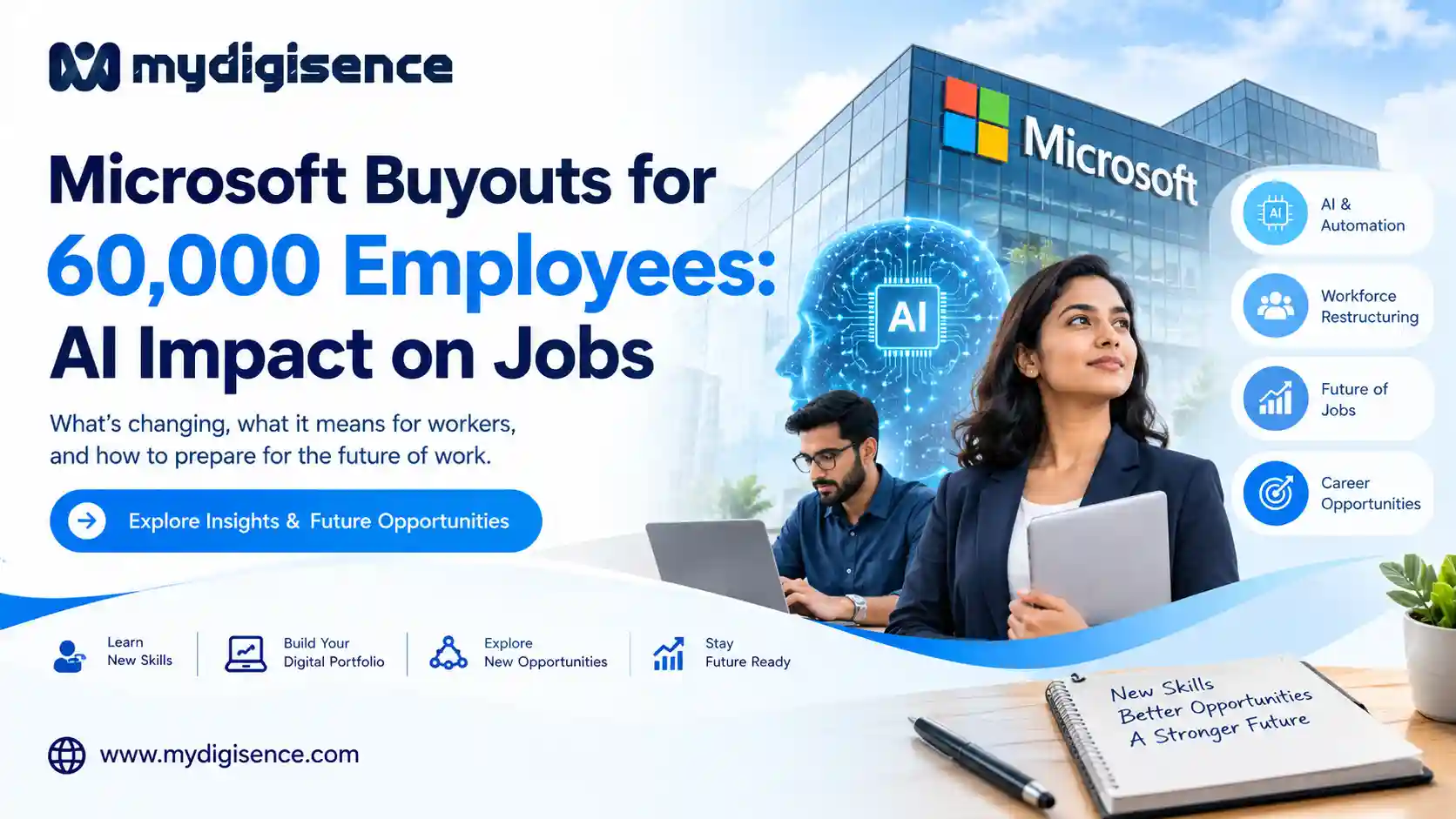
Microsoft has announced a voluntary employee buyout programme covering approximately 60,000 eligible employees across the United States, India, Canada, and the United Kingdom. The announcement comes as the technology company continues investing heavily in artificial intelligence, cloud computing, and AI infrastructure.
The news has raised an important question: Is artificial intelligence changing the future of jobs, or are companies simply restructuring their workforces to manage rising costs?
Microsoft's decision highlights a broader discussion about employee security, automation, changing job requirements, and the future of work.
For businesses, professionals, and freelancers, understanding these changes is becoming increasingly important.
Want to build your professional presence in a changing job market? Create your free professional profile on MyDigiSence to showcase your skills, services, and experience online.
Quick Answer: Why Is Microsoft Offering Buyouts to 60,000 Employees?
Microsoft announced a Voluntary Exit Offer (VEO) on October 26, 2026, making approximately 60,000 employees eligible to leave voluntarily with financial support and career-transition resources. The programme covers selected teams in India, the United States, Canada, and the United Kingdom. It comes amid Microsoft's substantial investments in artificial intelligence and efforts to adjust workforce costs and organizational priorities. However, the announcement does not mean 60,000 employees have been laid off, nor does it establish that AI directly replaced their jobs.
The development illustrates how major technology companies are balancing AI investment, operating expenses, and evolving workforce needs.
Key Takeaways
Microsoft has made voluntary buyout offers available to approximately 60,000 eligible employees.
The programme includes participating teams in India, the US, the UK, and Canada.
Employees at Microsoft's internal level 70 and below may qualify, depending on their organization.
The buyouts are voluntary and are different from compulsory layoffs.
Microsoft is investing heavily in AI technologies, data centres, and cloud infrastructure.
AI is changing how companies organize work, but the buyout announcement alone does not prove direct job replacement.
Professionals can prepare by developing AI skills, building portfolios, and strengthening their digital presence.
What Happened? Microsoft's 60,000 Employee Buyout Announcement
On October 26, 2026, Microsoft introduced a new Voluntary Exit Offer for employees in selected business divisions.
The programme potentially covers more than one-quarter of the company's reported global workforce.
According to Reuters, Microsoft employed approximately 223,000 full-time workers as of June 30, 2026.
Microsoft Chief People Officer Amy Coleman described the programme as a way to provide employees with greater flexibility while allowing participating organizations to adjust their workforce to changing business needs.
Eligible employees can choose whether to accept an offer rather than being automatically dismissed.
Which Microsoft Employees Are Eligible?
The programme covers eligible employees in participating teams across four countries:
United States
India
United Kingdom
Canada
Reportedly participating business areas include AI experiences, Microsoft Copilot, finance, human resources, Xbox, and Windows + Devices.
Some functions, including marketing, commercial business, and security, are excluded from the current programme.
Eligibility depends on an employee's location, organizational unit, and internal level.
Not every Microsoft employee in these countries is eligible.
Is Microsoft Laying Off 60,000 Employees?
No. Microsoft has not announced 60,000 compulsory layoffs.
The company has made voluntary exit offers available to approximately 60,000 employees.
There is an important difference between the two employment actions.
Voluntary buyout | Layoff |
|---|---|
Eligible employees choose whether to accept | Employer initiates the job termination |
May include financial incentives | May include severance compensation |
Participation determines actual departures | Affected positions are selected by the employer |
Employees can evaluate their options | Employees generally have less choice over the decision |
The final number of employees who accept Microsoft's buyout offer is not yet known.
Eligible employees reportedly have until early December 2026 to decide, with departures expected around the end of the year.
Why Is Microsoft Offering Employee Buyouts in 2026?
Several factors help explain Microsoft's decision.
1. Rising Artificial Intelligence Investment
Microsoft continues investing heavily in AI infrastructure, including data centres, advanced computing equipment, and cloud technology.
These investments support products and services such as Microsoft Azure and Microsoft Copilot.
Large infrastructure investments create pressure to manage other operating expenses.
2. Workforce Restructuring
Technology companies regularly reassess their workforce requirements as business priorities change.
Microsoft's voluntary buyout programme provides participating teams with another way to adjust staffing.
This may allow the company to redirect resources toward areas considered strategically important.
3. Changing Skill Requirements
AI adoption is influencing the skills required for software development, analytics, customer support, marketing, and business operations.
Some repetitive tasks may become increasingly automated, while other roles may require employees to work alongside AI systems.
This does not mean every affected employee's role is being replaced by AI.
4. Cost Management and Operational Efficiency
Companies investing in expensive technologies often review organizational costs and operational priorities.
Voluntary buyouts can help organizations adjust workforce size without immediately relying entirely on compulsory job reductions.
Is AI Replacing Jobs at Microsoft?
There is no confirmed evidence that Microsoft's latest 60,000-person buyout eligibility programme represents 60,000 jobs directly replaced by artificial intelligence.
However, AI is influencing how technology companies evaluate productivity, hiring, and workforce organization.
The distinction is between AI replacing a specific task and AI replacing an entire job.
For example, AI coding assistants can help developers generate code, identify errors, and prepare documentation.
Software engineers still need to understand requirements, evaluate security, design systems, and take responsibility for the finished product.
Similarly, AI tools may assist customer service teams with routine inquiries while human employees handle complicated cases.
The future of work may therefore involve both automation and collaboration between humans and AI.
How Is Artificial Intelligence Changing the Future of Jobs?
Artificial intelligence is transforming workplace activities across multiple industries.
Software Development
AI coding tools can assist developers with debugging, testing, documentation, and code generation.
Human developers remain responsible for architecture, complex problem-solving, and software quality.
Digital Marketing
AI can support keyword research, content planning, data analysis, and campaign optimization.
Marketing professionals still need creativity, customer understanding, strategy, and editorial judgment.
Human Resources
AI tools can assist with administrative processes, recruitment workflows, and workforce analytics.
Human oversight remains essential for fair employment decisions, privacy, and compliance.
Finance and Accounting
Automation can simplify repetitive financial processes, document analysis, and reporting.
Professional judgment remains necessary for financial controls, compliance, and complex decisions.
Customer Support
AI chatbots and virtual assistants can answer routine questions and provide basic assistance.
Human agents remain valuable for sensitive, unusual, and complex customer issues.
Which Jobs May Be More Exposed to AI Automation?
Jobs involving highly repetitive, structured, and predictable tasks may experience greater automation pressure.
Examples include routine data entry, basic document processing, standardized reporting, and some administrative workflows.
However, exposure to AI does not automatically mean a job will disappear.
A role may change substantially while remaining necessary.
Jobs involving complex decision-making, physical operations, human relationships, creativity, and accountability may continue to require significant human participation.
The actual impact will depend on technological capabilities, business decisions, regulation, and customer expectations.
What Does Microsoft's Buyout Programme Mean for Indian IT Employees?
India is one of the four countries included in Microsoft's voluntary exit programme.
This makes the announcement particularly relevant to Indian technology professionals and the broader IT services industry.
However, the company has not publicly confirmed that all Indian employees qualify or announced a specific number of departures in India.
Important Implications for Indian Professionals
AI skills: Developers, analysts, consultants, and other professionals may benefit from learning how AI tools are used in their industries.
Career flexibility: Employees may increasingly explore multiple career paths, including consulting, freelancing, entrepreneurship, and specialized technical roles.
Professional visibility: A strong online portfolio can help professionals demonstrate their experience and capabilities to potential clients and employers.
Continuous learning: Updating technical and business skills can help workers respond to changing job requirements.
India's technology workforce is likely to encounter both challenges and new opportunities as AI adoption expands.
What Should Microsoft Employees Consider Before Accepting a Buyout?
Employees who receive a voluntary exit offer should evaluate their personal and financial circumstances carefully.
Important considerations include:
Severance compensation: Understand the exact payment amount, conditions, and payment schedule.
Health coverage: Check how long medical benefits continue after departure.
Stock compensation: Review the treatment of vested and unvested stock awards.
Tax implications: Understand how severance payments may be taxed in your country.
Career opportunities: Assess current hiring conditions and the time potentially required to secure another role.
Financial readiness: Review savings, recurring expenses, and financial commitments.
Employment conditions: Check confidentiality, intellectual property, and other contractual provisions.
Buyout terms may differ according to employee level, tenure, and location.
Employees should rely on their individual offer documents and seek appropriate professional advice before deciding.
How Can Professionals Prepare for an AI-Driven Job Market?
Microsoft's announcement is a reminder that career development should not depend entirely on a single employer.
Professionals can take practical steps to improve their adaptability.
Learn Relevant AI Tools
Develop familiarity with AI applications used in your field.
For example, developers may explore coding assistants, while marketers may learn AI-supported analytics and content workflows.
Build a Strong Digital Portfolio
A professional portfolio allows potential employers and clients to evaluate your skills, previous projects, and experience.
Develop Human-Centred Skills
Communication, leadership, critical thinking, creativity, and relationship management remain valuable across industries.
Explore Independent Work Opportunities
Freelancing, consulting, and entrepreneurship can provide alternative career paths for professionals with marketable expertise.
However, these paths also involve business risks and do not guarantee income.
Maintain Professional Networks
Strong professional relationships can support referrals, collaboration, and future opportunities.
How MyDigiSence Helps Professionals Build Their Digital Presence
As AI changes employment and business opportunities, having a professional online presence can become increasingly valuable.
MyDigiSence is a unified business discovery and B2B marketplace platform in India that helps businesses and professionals showcase their services and expertise.
Professionals can use MyDigiSence to:
Create a digital professional profile
Showcase skills, projects, and services
Build an online portfolio
Present professional experience
Share contact information
Improve online discoverability
Connect with potential clients and business partners
For software developers, digital marketers, consultants, designers, and independent service providers, a professional profile can support visibility beyond traditional employment channels.
MyDigiSence does not replace a recruitment service or guarantee employment. Instead, it provides a space for professionals to present their work and explore potential business connections.
Will AI Create New Jobs in the Future?
AI can automate certain activities while also creating demand for new skills, services, and technologies.
Potential growth areas include:
AI engineering
Machine learning operations
AI security
Cloud infrastructure
Data engineering
AI governance
AI product management
Automation consulting
AI implementation and integration
Traditional roles may also evolve rather than disappear.
For example, a marketing professional may increasingly combine campaign strategy with AI-assisted analytics.
A software developer may use AI coding tools while focusing more on architecture, integration, and quality assurance.
The long-term employment outcome will depend on whether new opportunities grow quickly enough to offset displaced tasks and positions.
What Does Microsoft's Decision Mean for Businesses?
Microsoft's workforce changes offer several lessons for organizations of different sizes.
First, AI investment should be connected to clear business objectives rather than adopted simply because the technology is popular.
Second, companies need to consider employee training alongside automation.
Third, organizations should measure productivity improvements, implementation costs, data security, and customer outcomes before changing staffing strategies.
Finally, workforce planning should balance technological efficiency with human expertise and organizational knowledge.
For startups and MSMEs, thoughtful AI adoption may be more sustainable than replacing employees without evaluating long-term business consequences.
Conclusion
Microsoft's decision to offer voluntary buyouts to approximately 60,000 employees is a significant workforce development in 2026. It reflects the pressures technology companies face as they invest heavily in artificial intelligence while adjusting organizational priorities.
However, the announcement should not be interpreted as 60,000 confirmed layoffs or proof that AI has directly replaced those jobs.
The broader lesson is that the future of work will require adaptability, continuous learning, and stronger professional visibility.
For businesses and professionals in India, platforms such as MyDigiSence can support this transition by providing digital profiles, service listings, and opportunities to build professional connections.
As AI continues to reshape industries, professionals who combine technical knowledge, human expertise, and a credible digital presence will be better prepared to explore emerging opportunities.
Frequently Asked Questions
Did Microsoft lay off 60,000 employees in October 2026?
No. Microsoft announced voluntary buyout eligibility for approximately 60,000 employees. This does not mean all eligible employees will leave the company.
Why is Microsoft offering buyouts to employees?
Microsoft is adjusting its workforce and managing costs while investing heavily in artificial intelligence, cloud infrastructure, and other strategic priorities.
Are Microsoft employees in India affected?
Eligible employees in participating Microsoft teams in India may receive voluntary exit offers. Not every Microsoft employee in India is included.
What is Microsoft's Voluntary Exit Offer?
The Voluntary Exit Offer is a time-limited programme that allows eligible employees to leave voluntarily with financial support and career-transition resources.
Is AI responsible for Microsoft's employee buyouts?
Microsoft's AI spending forms part of the broader financial and strategic context. However, the announcement does not establish that AI directly replaced the jobs of eligible employees.
Which Microsoft departments are included?
Reported participating areas include AI experiences, Copilot, finance, human resources, Xbox, and Windows + Devices. Eligibility varies by team.
When must eligible employees decide?
According to reports, eligible employees have until early December 2026 to consider their offers, with departures expected around year-end.
Will AI replace software developers and IT professionals?
AI may automate some software development activities, but complex engineering, system design, security, and professional judgment continue to require human expertise.
How can employees prepare for AI-driven workforce changes?
Professionals can develop relevant AI skills, maintain a portfolio, strengthen professional networks, and explore suitable employment or independent business opportunities.
Visit Also: Future of B2B Marketplace Platforms: 2027 Trends
Our Social Account:
Written by
Shivam Thakur
Oct 27, 2026
More from the blog
Google Gemini 4 Carbon: Features, Pricing & Business Impact
Google Gemini 4 Carbon is Google's latest frontier AI model focused on coding, cybersecurity, and complex reasoning. Explore its features, benchmarks, pricing, availability, and potential business applications.
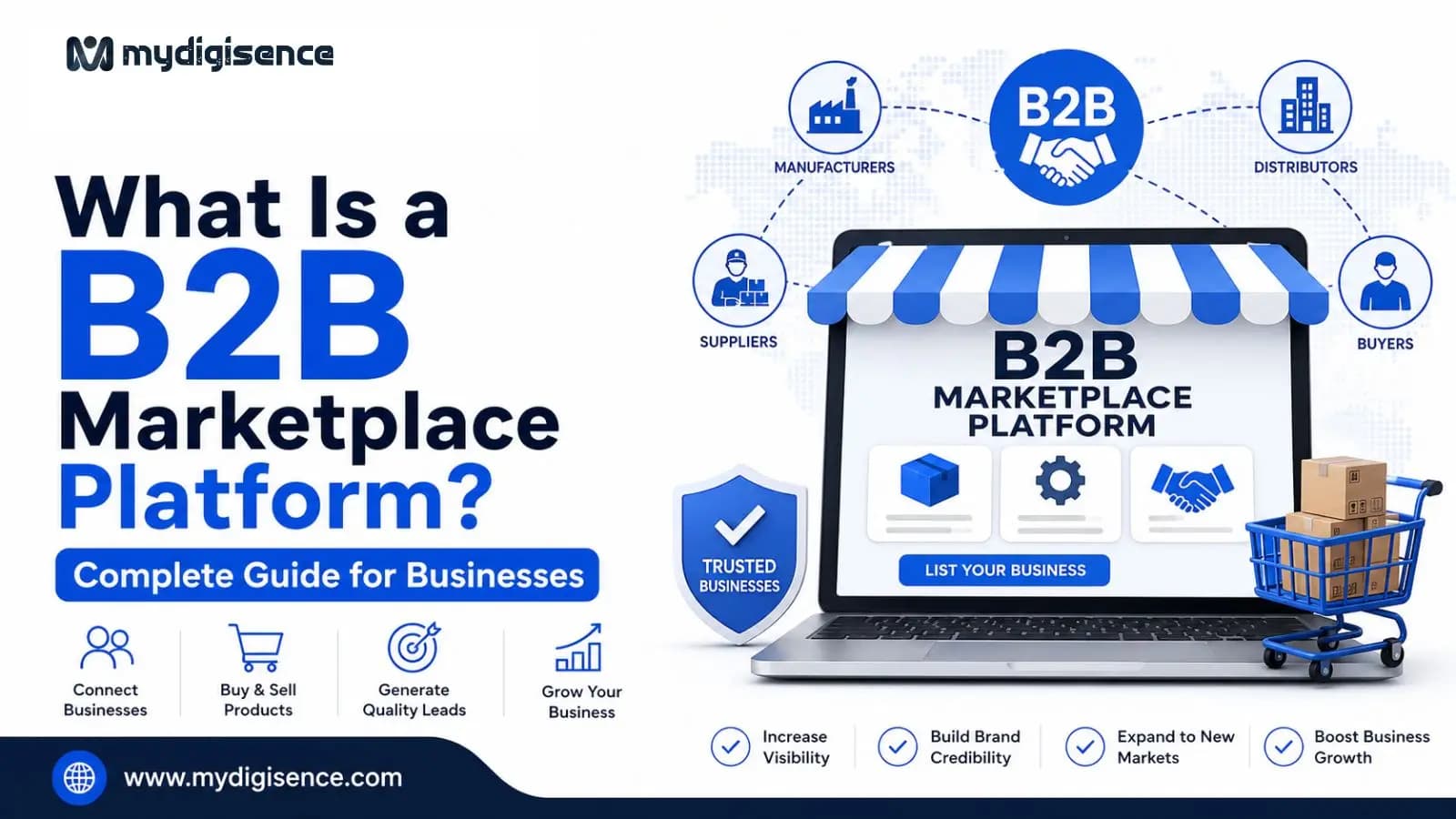
What Is a B2B Marketplace Platform? Complete Guide for Businesses
Learn what a B2B marketplace platform is, how it works, its benefits, key features, and why MyDigiSence is the ideal B2B marketplace platform to grow your business online.