
B2B Marketplace Platform for Local Businesses
Local businesses increasingly use digital marketplaces to find customers, promote their services, and build relationships with other businesses.
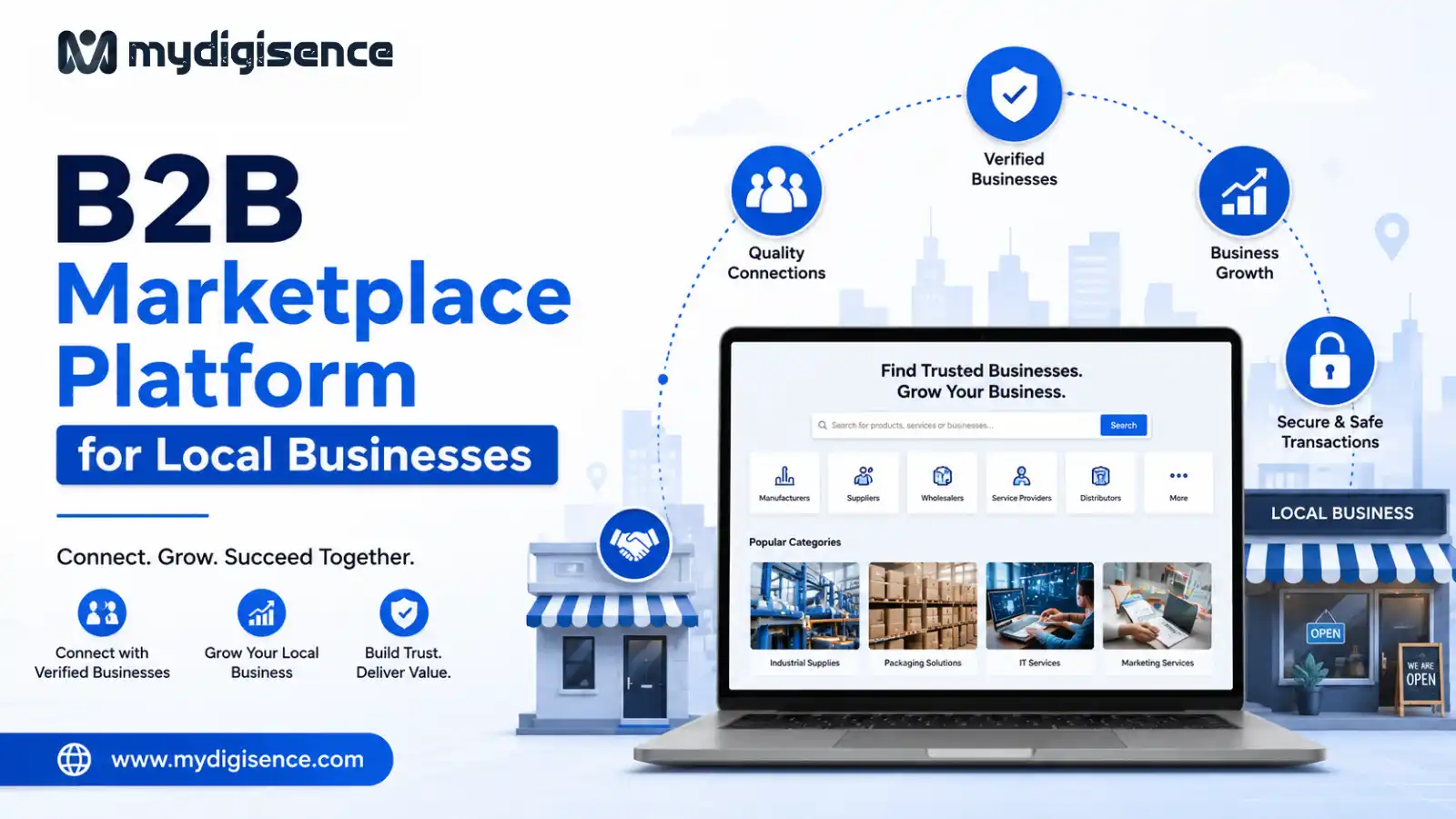
Local businesses increasingly use digital marketplaces to find customers, promote their services, and build relationships with other businesses. But simply creating a listing is not enough. Sellers need the right tools to build trust, increase visibility, manage inquiries, and keep business information secure.
So, what tools help sellers on small business marketplaces build trust, visibility, and security?
The most useful tools include verified business profiles, reviews and ratings, business credentials, product and service catalogs, search and category optimization, inquiry management, secure communication, profile analytics, privacy controls, and account security features. Together, these tools help local sellers appear more credible, become easier to discover, respond to potential customers, and protect their business information.
For businesses using an online B2B marketplace in India, these capabilities are particularly valuable because buyers often compare multiple suppliers, service providers, manufacturers, and local businesses before making contact.
What Is a B2B Marketplace Platform for Local Businesses?
A B2B marketplace platform for local businesses is a digital platform where businesses can discover, list, compare, and connect with other businesses for products or services.
Instead of depending entirely on offline networking, referrals, or traditional advertising, sellers can create a digital presence that works as a business discovery point.
Typical participants include:
Local manufacturers
Wholesalers
Distributors
Suppliers
Service providers
Contractors
Agencies
Consultants
Retail businesses serving other businesses
Small and medium-sized enterprises
The platform becomes more useful when it provides tools beyond basic business listings.
A seller should be able to establish credibility, showcase offerings, appear in relevant searches, communicate with prospects, and manage their account securely.
1. Verified Business Profiles Build Trust
A verified business profile is one of the most important trust-building tools for sellers.
Buyers want to know whether they are dealing with a genuine company or an incomplete listing. A profile containing accurate business information gives potential customers more confidence before initiating an inquiry.
A useful business profile can include:
Business name
Business category
Location
Contact information
Products or services
Business description
Website
Operating information
Business photographs
Certifications where applicable
Years of experience
Areas served
Verification indicators can provide another layer of confidence when the marketplace has a process for validating business information.
For local businesses, this is especially important because buyers may have little prior knowledge of a supplier or service provider.
2. Ratings and Customer Reviews
Reviews are another major trust signal.
Before contacting a seller, buyers often look for evidence that other customers have had positive experiences. A review system allows businesses to demonstrate customer satisfaction publicly.
Useful review tools can allow:
Customer ratings
Written reviews
Review responses
Review reporting
Review moderation
Verified customer feedback
Sellers should not focus on collecting large numbers of reviews alone. Genuine, relevant, and detailed feedback is more useful for establishing credibility.
A seller can also respond professionally to reviews. Even a negative review can become an opportunity to demonstrate transparency and customer service.
3. Business Credentials and Certifications
Credentials help buyers evaluate whether a seller has the expertise or qualifications relevant to their requirements.
Depending on the industry, a marketplace profile may allow sellers to showcase:
Business registrations
Industry certifications
Professional qualifications
Product certifications
Awards
Memberships
Licenses where applicable
These details can be particularly useful for technical, professional, manufacturing, and specialized service businesses.
However, marketplaces should encourage sellers to provide accurate information rather than allowing unsupported claims.
4. Product and Service Catalogs
A basic company description tells buyers who a business is. A product and service catalog explains what that business actually offers.
This makes catalog functionality an important visibility and conversion tool.
Sellers can use catalogs to display:
Product names
Service names
Product categories
Specifications
Images
Descriptions
Available options
Service areas
Minimum order information where relevant
For example, instead of listing a company simply as a "manufacturer," a seller can create individual listings for the products they manufacture.
This gives buyers more opportunities to discover the business through relevant searches.
5. Search and Category Optimization
Visibility depends heavily on how easily buyers can find a seller.
A strong B2B marketplace should provide category and search functionality that connects relevant buyers with relevant businesses.
Sellers can improve discoverability by using accurate:
Business categories
Product categories
Service categories
Locations
Keywords
Product descriptions
Business descriptions
For a local business, location can be particularly important.
A buyer searching for a supplier in a particular city or region should be able to find businesses that actually serve that area.
This is one reason a well-structured online B2B marketplace in India can be useful for small businesses seeking customers beyond their immediate offline network.
6. Location-Based Discovery
Local businesses need visibility in the areas where they actually operate.
Location-based marketplace tools help buyers discover businesses according to:
City
State
Region
Service area
Business location
Delivery area
For example, a buyer searching for packaging suppliers in a particular city should be able to narrow the results to relevant businesses instead of reviewing unrelated listings from across the country.
Location filtering also makes marketplace searches more practical for buyers who prefer nearby suppliers or service providers.
7. Inquiry and Lead Management Tools
Visibility is only useful when it can turn into meaningful business conversations.
An inquiry management system helps sellers handle incoming requests without losing track of potential customers.
Useful features can include:
Inquiry notifications
Lead inboxes
Customer contact information
Inquiry history
Response tracking
Status management
Follow-up reminders
For a small business owner, this can be more useful than simply displaying a phone number.
A structured inquiry system gives sellers a central place to manage potential opportunities.
8. Secure Business Communication
Communication tools should make it easy for buyers and sellers to discuss requirements while protecting users from unnecessary security risks.
A marketplace may provide:
In-platform messaging
Controlled contact sharing
Inquiry forms
Message history
Spam reporting
Blocking tools
Suspicious-message reporting
Secure communication is particularly important when sellers receive inquiries from people they have never interacted with before.
Sellers should also avoid sharing sensitive business information until they have established that a prospective customer is legitimate.
9. Profile Analytics and Performance Data
Analytics tools help sellers understand whether their marketplace presence is actually generating visibility.
Useful metrics may include:
Profile views
Listing views
Search impressions
Product views
Inquiry counts
Customer interactions
Response activity
This information helps businesses identify what is working.
For example, if a product receives many views but few inquiries, the seller may need to improve the description, images, pricing information, or call-to-action.
Analytics turn a marketplace profile from a static listing into a measurable business asset.
10. Profile Completeness Tools
Many small businesses create a profile but leave important sections incomplete.
A profile completeness tool can highlight missing information and encourage sellers to improve their presence.
For example, the platform might identify missing:
Business descriptions
Product images
Service information
Contact details
Location
Business categories
Certifications
Website information
A complete profile provides buyers with more information before they make contact.
It can also improve the quality of the seller's marketplace presence.
11. Image and Media Tools
Visual information can make business profiles easier to understand.
Sellers can use images to showcase:
Products
Offices
Manufacturing facilities
Completed projects
Team members
Equipment
Storefronts
Services in action
For product-based businesses, high-quality images can help buyers evaluate offerings before requesting additional information.
Media should be authentic and relevant. Misleading images can damage trust rather than build it.
12. Account Security Tools
Trust is not limited to the buyer-seller relationship. Sellers also need to protect their marketplace accounts.
Important security tools can include:
Strong password requirements
Two-factor authentication
Login alerts
Session management
Email verification
Phone verification
Password recovery
Suspicious-login detection
These features reduce the risk of unauthorized account access.
For businesses, account security matters because a compromised profile could affect customer communication, business information, and brand reputation.
13. Privacy and Data Controls
Sellers should have control over what business information is publicly visible.
Privacy controls can help businesses manage:
Contact information
Email visibility
Phone visibility
Business address
Profile visibility
Communication preferences
Not every business needs to expose every piece of information publicly.
Giving sellers reasonable control over their information creates a safer and more professional marketplace environment.
14. Spam and Fraud Protection
Small businesses can lose valuable time responding to irrelevant or suspicious inquiries.
Marketplace platforms should therefore provide mechanisms for:
Reporting spam
Blocking users
Detecting suspicious activity
Flagging inappropriate listings
Moderating content
Reporting fraudulent behavior
These tools protect both buyers and sellers.
A marketplace becomes more trustworthy when users have a clear way to report suspicious activity.
15. Business Listing Management
A seller's business information can change over time.
For example:
A company may change its phone number.
It may move to a new location.
It may introduce new services.
It may stop offering an old product.
Its operating information may change.
A listing management dashboard allows businesses to update their information without creating an entirely new profile.
Keeping listings current is important because outdated information can reduce customer confidence.
16. AI Tools for Better Business Visibility
AI is becoming another useful layer in modern B2B marketplaces.
AI-powered tools can help sellers improve:
Business descriptions
Product descriptions
Profile content
Category selection
Keyword suggestions
Listing quality
Content recommendations
For small businesses that do not have dedicated marketing teams, these tools can make it easier to create clearer and more complete marketplace profiles.
However, AI-generated information should always be reviewed by the business owner to ensure that it is accurate.
17. Recommendation and Matching Tools
A marketplace becomes more valuable when it can help buyers discover relevant sellers instead of simply displaying thousands of listings.
Recommendation tools can potentially match businesses based on:
Category
Location
Products
Services
Buyer requirements
Industry
Business attributes
For sellers, better matching can mean greater exposure to buyers who are actually interested in what they offer.
This is more useful than generating visibility among completely unrelated audiences.
How These Tools Work Together
The real value comes from combining these tools rather than using them individually.
A seller might follow this journey:
Verified profile → Better business information → Product/service listings → Search visibility → Buyer discovers listing → Inquiry received → Secure communication → Lead follow-up → Customer relationship
Security operates throughout the entire process.
For example, verification helps establish trust, search tools improve discovery, catalogs communicate the offering, inquiry tools support lead generation, and account security protects the seller's digital presence.
What Should Sellers Look for in a B2B Marketplace Platform?
Before joining a marketplace, local businesses should evaluate whether the platform provides practical tools rather than focusing only on the number of listed businesses.
Look for:
Trust Features
Business verification
Reviews and ratings
Credentials
Complete business profiles
Transparent business information
Visibility Features
Search optimization
Category listings
Location-based discovery
Product and service catalogs
Profile analytics
Recommendation tools
Lead Management Features
Inquiry forms
Lead notifications
Messaging
Inquiry history
Follow-up tools
Security Features
Account verification
Two-factor authentication
Login protection
Privacy controls
Spam reporting
User blocking
A platform offering these capabilities can provide more practical value than a simple online directory.
How MyDigiSence Fits Into the Local B2B Marketplace Model
MyDigiSence is a B2B marketplace platform that gives businesses a digital environment to showcase their products and services and connect with other businesses.
For sellers, the important point is not simply having a listing. The value comes from creating a useful and trustworthy digital business presence that buyers can discover and evaluate.
Businesses can use marketplace functionality to improve their online visibility, present their offerings, receive business inquiries, and build connections with potential customers and partners.
The broader goal is to make business discovery more organized for both sellers and buyers.
B2B Marketplace vs. a Basic Business Listing
A basic business listing primarily provides information about a company.
A modern B2B marketplace can go further by combining:
Capability | Basic Business Listing | B2B Marketplace |
|---|---|---|
Business profile | Yes | Yes |
Product/service listings | Limited | Yes |
Business discovery | Yes | Yes |
Category search | Sometimes | Yes |
Location search | Sometimes | Yes |
Buyer inquiries | Limited | Yes |
Lead management | Usually limited | Yes |
Reviews | Sometimes | Yes |
Analytics | Limited | Yes |
Security tools | Basic | More comprehensive |
Business networking | Limited | Yes |
This distinction matters for small businesses that want their digital presence to contribute to actual business development rather than simply provide contact information.
Final Answer: Which Tools Matter Most?
For sellers on a small business marketplace, the most important tools can be grouped into three areas:
Trust: Verified profiles, reviews, credentials, complete business information, and authentic product or service details.
Visibility: Search and category optimization, location discovery, product catalogs, profile analytics, recommendations, and AI-assisted listing optimization.
Security: Account verification, two-factor authentication, privacy controls, secure communication, spam protection, and suspicious-activity reporting.
The strongest B2B marketplace platforms bring these capabilities together instead of treating a business listing as just an online contact card.
For local businesses, the objective should be simple: be discoverable by the right buyers, provide enough information to earn their trust, make it easy to start a business conversation, and protect the account and information throughout the process. A platform such as MyDigiSence can serve as part of that digital ecosystem, helping businesses establish and manage their presence in the growing B2B marketplace environment.
You May Visit Also: What Tools Help Sellers on Small Business Marketplaces Build Trust, Visibility, and Security
Frequently Asked Questions
What tools help sellers build trust on small business marketplaces?
Verified profiles, ratings, customer reviews, business credentials, certifications, complete company information, authentic images, and transparent business details are among the most useful trust-building tools.
How can sellers improve visibility on a B2B marketplace?
Sellers can improve visibility by completing their profiles, selecting accurate categories, adding relevant products and services, providing location information, using quality descriptions and images, and monitoring profile analytics.
What security tools should a B2B marketplace provide?
Important security features include account verification, strong passwords, two-factor authentication, login alerts, privacy controls, spam reporting, user blocking, and suspicious-activity monitoring.
Why are reviews important for local businesses?
Reviews provide social proof and help potential buyers evaluate a business before making contact. Genuine customer feedback can strengthen credibility and reduce uncertainty.
Can AI help small businesses improve marketplace visibility?
Yes. AI can assist with business descriptions, product descriptions, keyword suggestions, profile optimization, category recommendations, and other content-related tasks. Businesses should review AI-generated content for accuracy before publishing it.
Is a B2B marketplace useful for local businesses in India?
Yes. An online B2B marketplace in India can help local businesses become discoverable to buyers, suppliers, distributors, and service seekers beyond their immediate offline network.
Written by
Shivam Thakur
Aug 11, 2026
More from the blog
What Is the Best B2B Lead Generation List Company?
Looking for the best B2B lead generation list company? Learn how business listings and B2B marketplaces can help companies improve online visibility, connect with potential buyers, and create new lead-generation opportunities with MyDigiSence.

How do I create a complete B2B company profile that attracts leads?
Learn how to create a complete B2B company profile that builds trust, explains your services clearly, attracts the right customers, and turns business visitors into qualified leads.
Why Every Manufacturer Should Join a B2B Marketplace Platform
Discover why manufacturers should join a B2B marketplace platform to increase visibility, generate leads, reach buyers, and grow with MyDigiSence.