
How to Generate B2B Leads Without Paid Advertising
Learn how to generate B2B leads without paid advertising using SEO, content marketing, business listings, referrals, LinkedIn, email outreach, and B2B marketplaces.
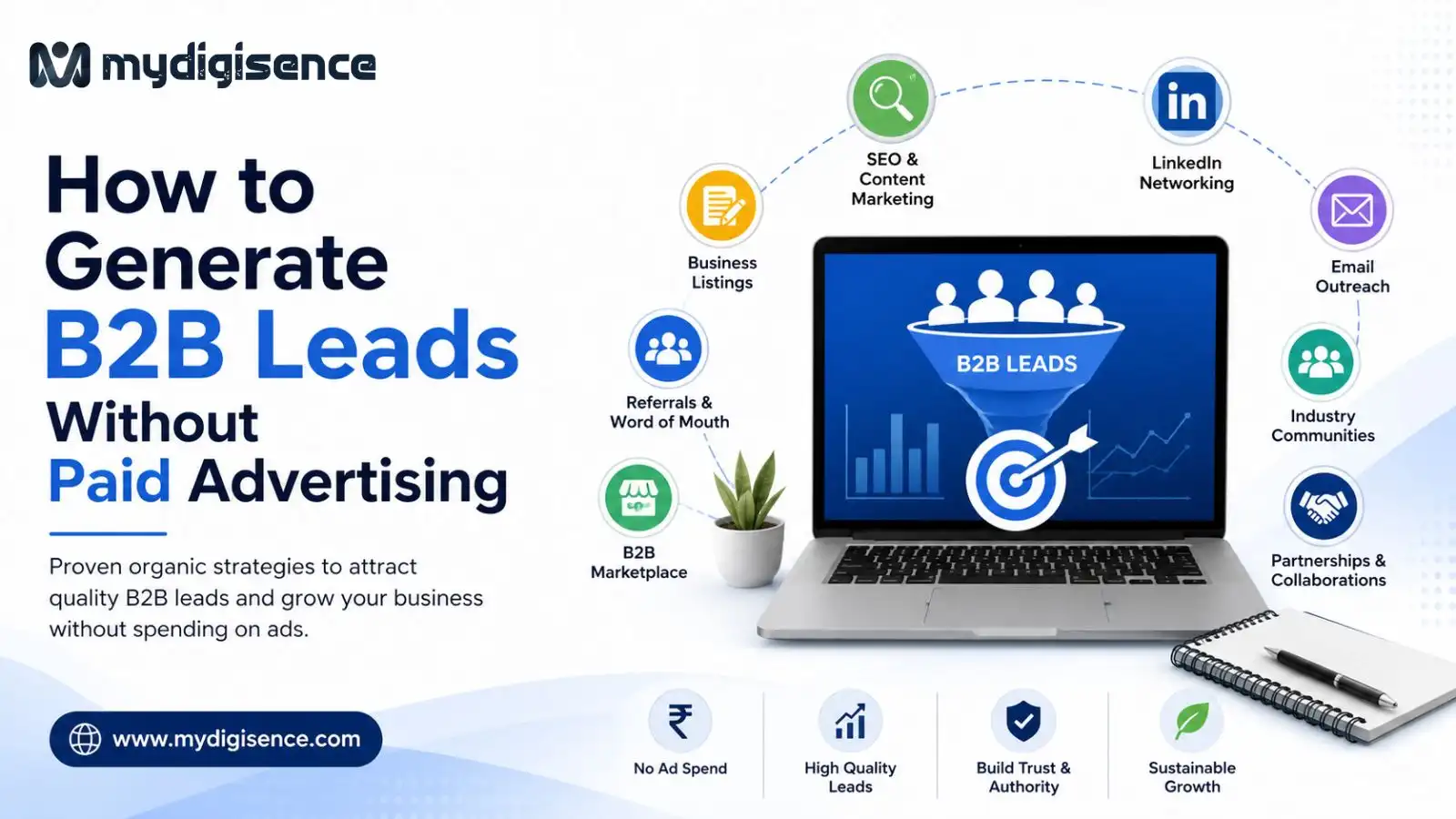
Qucik Overview:
You can generate qualified B2B leads without paid advertising or hiring a marketing agency by using SEO, helpful content, free business listings, LinkedIn networking, email outreach, referrals, and B2B marketplace platforms. Businesses that focus on attracting the right audience instead of simply increasing traffic are more likely to generate enquiries that convert into customers.
Let's Start
Generating B2B leads does not always require a large advertising budget. Businesses can attract potential customers organically through SEO, useful content, business listings, referrals, social networking, email outreach, partnerships, and B2B marketplace platforms.
The key is to build multiple organic channels that consistently put your business in front of people who already need your products or services.
For startups, small businesses, manufacturers, suppliers, agencies, and service providers, this approach can be especially valuable. Instead of paying for every click or impression, businesses can build digital assets that continue attracting prospects over time.
My DigiSence can be part of this strategy by helping businesses create a professional online presence, showcase their products and services, and become easier for potential buyers to discover.
What Is B2B Lead Generation Without Paid Advertising?
B2B lead generation without paid advertising means attracting potential business customers through organic and relationship-based marketing channels rather than relying primarily on paid search, social media advertisements, or sponsored campaigns.
Instead of paying to immediately reach an audience, businesses invest time in activities such as:
Search engine optimisation
Content marketing
Business listings
Referral marketing
LinkedIn networking
Email prospecting
Industry communities
Partnerships
Organic social media
B2B marketplaces
These methods can take longer than paid advertising, but they can create sustainable sources of traffic and enquiries.
1. Use SEO to Attract Buyers Searching on Google
SEO is one of the most valuable long-term methods for generating B2B leads without paid advertising.
The basic idea is simple:
Buyer searches → Your content appears → Buyer visits your website → Buyer makes an enquiry
Instead of targeting only broad keywords, focus on searches that indicate genuine commercial intent.
For example:
B2B packaging supplier in India
Industrial machinery manufacturer
Digital marketing services for manufacturers
Wholesale clothing supplier
IT services for small businesses
Create dedicated pages that answer these searches clearly.
Focus on three types of keywords:
Informational:
"What is B2B lead generation?"
Commercial:
"Best B2B lead generation platform"
Transactional:
"Buy packaging products from Indian manufacturers"
A combination of these keywords can attract prospects at different stages of the buying journey.
2. Create Content That Solves Buyer Problems
Content marketing can generate leads without paying for every visitor.
Instead of writing only promotional content, answer the questions your target customers actually ask.
Examples include:
How to choose a reliable supplier
What to consider before buying industrial equipment
How businesses can reduce procurement costs
Questions to ask a B2B service provider
How to compare suppliers in India
Useful content establishes expertise before a buyer ever contacts you.
At the end of relevant articles, provide a clear next step such as:
Request a Quote | Contact Us | Explore Our Services | List Your Business
This turns informational traffic into potential leads.
3. List Your Business on Relevant Platforms
Business listings can increase your online visibility without requiring paid advertising.
Create complete profiles on relevant platforms and include:
Business name
Products and services
Location
Contact details
Website
Business description
Images
Industry category
The objective isn't to list your business everywhere.
Instead, focus on relevant and trustworthy platforms where your target customers are likely to search.
A well-maintained business profile can become another discovery point for potential customers.
You May Like Also: Best Justdial Alternative in India
4. Use a B2B Marketplace Platform
A B2B marketplace can be another organic lead-generation channel.
Instead of waiting for customers to discover your standalone website, you can place your business where buyers are already searching for suppliers, manufacturers, products, and professional services.
For example, businesses can use My DigiSence to:
Create a professional business profile
Showcase products and services
Improve online discoverability
Reach potential business buyers
Receive enquiries
Strengthen their digital business presence
For a deeper explanation of the process, see our guide on How B2B Marketplace Platforms Help Generate Leads.
This is particularly useful for businesses that want to complement their website SEO with marketplace visibility.
5. Build Your Google Business Profile
For businesses serving specific locations, Google Business Profile can be an important organic discovery channel.
Keep your profile accurate and up to date with:
Business category
Phone number
Website
Location
Opening hours
Photos
Products or services
Customer reviews
A strong local presence can help potential customers discover your company when searching for relevant businesses nearby.
6. Generate Leads Through LinkedIn Organically
LinkedIn can be valuable for B2B prospecting without requiring paid advertising.
Instead of immediately sending promotional messages, build relationships with relevant people.
A practical approach:
Identify your ideal customer.
Search for relevant decision-makers.
Follow their activity.
Share useful industry content.
Comment thoughtfully on relevant posts.
Connect with prospects professionally.
Start genuine conversations.
Introduce your offering when there is a relevant business need.
The objective is not to send hundreds of generic messages.
Quality conversations are more valuable than mass outreach.
7. Use Email Outreach Strategically
Email can generate B2B leads without advertising spend, especially when you have a well-defined target audience.
A good B2B email should be:
Short
Relevant
Personalised
Clear
Focused on the recipient's problem
Avoid sending the same generic message to hundreds of companies.
Instead, explain why you're contacting that particular business and what problem you may be able to solve.
For example:
"We noticed your company works with industrial packaging. We help manufacturers source customised packaging solutions and would be happy to share relevant options."
A relevant message is more likely to generate a conversation than a generic sales pitch.
8. Turn Existing Customers Into Referral Sources
Your existing customers can become a powerful source of new B2B leads.
After successfully completing a project or order, ask satisfied customers whether they know another business that could benefit from your services.
You can also create a structured referral programme.
Referral leads can be valuable because the prospect already receives some level of trust through the recommendation.
9. Build Strategic Business Partnerships
Partnerships can introduce your company to an entirely new audience.
For example:
A web agency can partner with a branding company.
A manufacturer can partner with distributors.
A consultant can partner with complementary consultants.
A technology company can partner with implementation providers.
The ideal partner serves a similar audience without directly competing with you.
Both businesses can then exchange referrals and create new opportunities organically.
10. Participate in Industry Communities
Industry-specific communities can help businesses build authority and discover potential customers.
Depending on your industry, these may include:
Professional forums
Business communities
Industry associations
Online groups
Networking organisations
Trade communities
Don't treat communities as places to constantly promote your business.
Answer questions, share useful knowledge, and participate in meaningful discussions.
When people recognise your expertise, they are more likely to investigate your business when they need your services.
11. Optimise Your Website for Lead Conversion
Getting organic traffic is only half the job.
Your website must make it easy for visitors to become leads.
Include clear calls to action such as:
Request a Quote
Contact Our Team
Get a Consultation
Ask for Pricing
Enquire Now
Talk to an Expert
Also make sure your contact forms are simple.
If a visitor has to complete a 15-field form just to ask a basic question, you may lose the lead.
12. Create Dedicated Landing Pages
Don't send every potential customer to your homepage.
Create dedicated pages for important:
Products
Services
Industries
Locations
Customer types
For example, instead of one generic page called "Our Services," a marketing agency might create:
Digital Marketing for Manufacturers
SEO Services for B2B Companies
Lead Generation for Indian Businesses
Each page can target a specific search intent and provide a more relevant conversion path.
13. Nurture Leads You Already Have
Generating new leads isn't the only way to grow.
Some prospects aren't ready to purchase immediately.
Instead of abandoning them, continue providing useful information through:
Follow-up emails
Product updates
Helpful resources
Case studies
New service announcements
Industry insights
Lead nurturing keeps your business visible until the prospect is ready to make a decision.
How to Get More Qualified B2B Leads Without Hiring an Agency
Many businesses assume they need to hire a marketing or lead generation agency to attract qualified B2B leads. While agencies can be valuable for some companies, they are not the only path to business growth.
If you understand your target audience and build a consistent lead generation strategy, you can attract high-quality enquiries without outsourcing the entire process.
Here are a few practical ways to generate more qualified B2B leads on your own:
1. Define Your Ideal Customer Profile (ICP)
Not every lead is a good lead. Start by identifying:
Industries you want to serve
Company size
Decision-makers
Geographic location
Common business challenges
When your marketing speaks directly to your ideal customer, you're more likely to attract relevant enquiries.
2. Optimise Your Website for Buyer Intent
Your website should answer the questions potential customers ask before contacting you.
Include:
Detailed service pages
Industry-specific landing pages
FAQs
Case studies
Clear calls to action
The easier it is for visitors to understand your expertise, the more likely they are to become qualified leads.
3. Publish Helpful Content Regularly
Instead of constantly promoting your business, create content that solves real problems.
Examples include:
Buying guides
Industry trends
Product comparisons
Best practices
Step-by-step tutorials
Useful content builds trust and attracts visitors who are already looking for solutions.
4. Build Your Presence Across Multiple Channels
Don't rely on one source of traffic.
Maintain an active presence through:
Your website
Google Business Profile (if relevant)
LinkedIn
Industry directories
B2B marketplace platforms such as My DigiSence
This increases the chances of potential buyers discovering your business.
5. Respond Quickly to Enquiries
Lead quality is important, but response time also matters.
Replying promptly, asking the right questions, and understanding a prospect's requirements can improve the chances of turning an enquiry into a customer.
6. Measure Lead Quality Instead of Lead Quantity
Rather than focusing only on the number of enquiries, track:
Qualified leads
Conversion rate
Sales opportunities
Customer acquisition
Revenue generated
A smaller number of qualified leads is often more valuable than a large number of unqualified enquiries.
The goal isn't simply to generate more leads—it's to attract businesses that genuinely need your products or services.
14. Use Reviews and Social Proof
Before contacting a new supplier or service provider, buyers often look for evidence that the business is trustworthy.
Show relevant proof such as:
Customer reviews
Testimonials
Case studies
Certifications
Industry experience
Successful projects
Client results
Don't fabricate testimonials or exaggerate results.
Authentic social proof can help turn an uncertain visitor into a qualified enquiry.
15. Track Where Your Organic Leads Come From
You cannot improve what you don't measure.
Track metrics such as:
Organic website traffic
Search rankings
Profile views
Business enquiries
Contact-form submissions
Referral leads
Email responses
Conversion rates
Qualified leads
The goal isn't simply to generate more leads.
The goal is to discover which channels produce better-quality leads.
Free B2B Lead Generation vs Paid Advertising
Both approaches have advantages.
Factor | Organic Lead Generation | Paid Advertising |
|---|---|---|
Initial financial cost | Usually lower | Requires advertising budget |
Speed | Usually slower | Can produce traffic quickly |
Long-term value | Can compound over time | Traffic often stops when campaigns stop |
SEO benefit | Yes | Not directly |
Relationship building | Strong | Depends on campaign |
Scalability | Gradual | Can scale quickly with budget |
Best for | Sustainable growth | Fast visibility and testing |
This doesn't mean paid advertising is bad.
For many businesses, the strongest strategy is to combine organic lead generation with paid campaigns when the budget and goals justify it.
How My DigiSence Can Support Organic B2B Lead Generation
For businesses looking to expand their digital presence without depending entirely on advertising, My DigiSence provides another channel for online discovery.
Businesses can create a professional profile, present their products and services, and make their company easier for potential buyers to discover.
The platform can complement:
Your company website
SEO strategy
Google Business Profile
Social media
Email outreach
Referral marketing
Content marketing
Think of your My DigiSence profile as one additional digital touchpoint in your overall lead-generation system.
A Simple B2B Lead Generation Strategy Without Ads
If you're starting from scratch, don't try every strategy at once.
Follow this simple process:
Step 1: Define Your Ideal Customer
Identify:
Industry
Company size
Location
Job role
Business problem
Buying intent
Step 2: Build Your Digital Foundation
Create:
A professional website
Google Business Profile where relevant
Complete business listings
A professional My DigiSence profile
Step 3: Target Buyer Searches
Research keywords and questions your potential customers use.
Step 4: Publish Useful Content
Create articles, guides, FAQs, and service pages that answer those questions.
Step 5: Build Relationships
Use LinkedIn, email, referrals, communities, and partnerships.
Step 6: Convert Visitors
Add clear CTAs, enquiry forms, contact information, and trust signals.
Step 7: Measure and Improve
Identify which channels bring qualified leads and invest more effort into those channels.
How Long Does It Take to Generate B2B Leads Without Paid Advertising?
There is no universal timeline.
SEO and content marketing can take time to build momentum, while referrals and direct outreach may generate conversations sooner.
Results depend on:
Industry competition
Search demand
Website authority
Content quality
Target audience
Sales process
Consistency
The important point is to build repeatable organic channels rather than expecting immediate results from one activity.
Final Thoughts
You don't need paid advertising to start generating B2B leads. You need a strong digital presence, a clear target audience, useful content, consistent outreach, and multiple ways for potential customers to discover and contact your business.
SEO, business listings, referrals, LinkedIn, email outreach, partnerships, content marketing, and B2B marketplace platforms can all contribute to an organic lead-generation strategy.
For businesses looking to expand their online presence, My DigiSence can serve as one additional channel for showcasing products and services and connecting with potential business buyers.
The most effective strategy isn't to find one "magic" source of free leads. It's to build a system where search visibility attracts prospects, useful content builds trust, marketplace and business profiles improve discovery, and effective follow-up turns enquiries into customers.
Frequently Asked Questions
Can I generate B2B leads without spending money on ads?
Yes. Businesses can use SEO, content marketing, referrals, organic LinkedIn activity, email outreach, business listings, partnerships, communities, and B2B marketplaces to generate leads without relying on paid advertising.
What is the best free way to generate B2B leads?
There isn't one universal method. SEO can be valuable for long-term organic discovery, while referrals, networking, and targeted outreach can help create opportunities more quickly.
Can a B2B marketplace help generate free leads?
A B2B marketplace can create additional opportunities for business discovery and enquiries. Results depend on the platform, profile quality, competition, category, and how actively the business manages its listing.
Is SEO better than paid advertising for B2B leads?
Neither is universally better. SEO can build long-term organic visibility, while paid advertising can provide faster exposure. Many businesses use both depending on their goals and budget.
How can I get more qualified B2B leads without hiring an agency?
You can generate qualified B2B leads without hiring an agency by improving your website's SEO, publishing helpful content, creating industry-specific landing pages, maintaining complete business listings, building relationships on LinkedIn, using email outreach, and showcasing your business on B2B marketplace platforms. Focusing on your ideal customer profile and providing valuable information can help attract prospects who are more likely to become customers.
Written by
Shivam Thakur
Jul 29, 2026
More from the blog
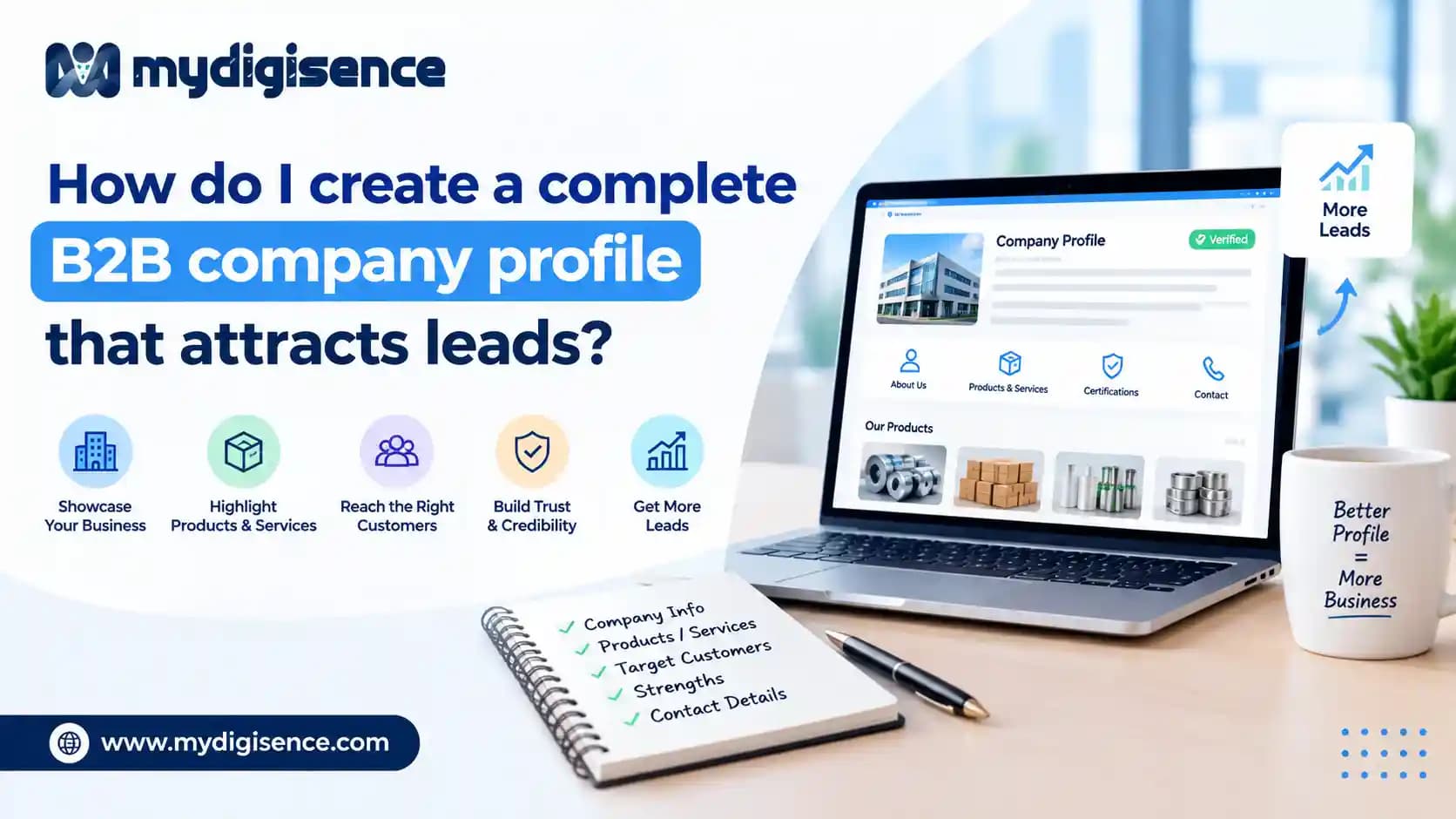
How do I create a complete B2B company profile that attracts leads?
Learn how to create a complete B2B company profile that builds trust, explains your services clearly, attracts the right customers, and turns business visitors into qualified leads.
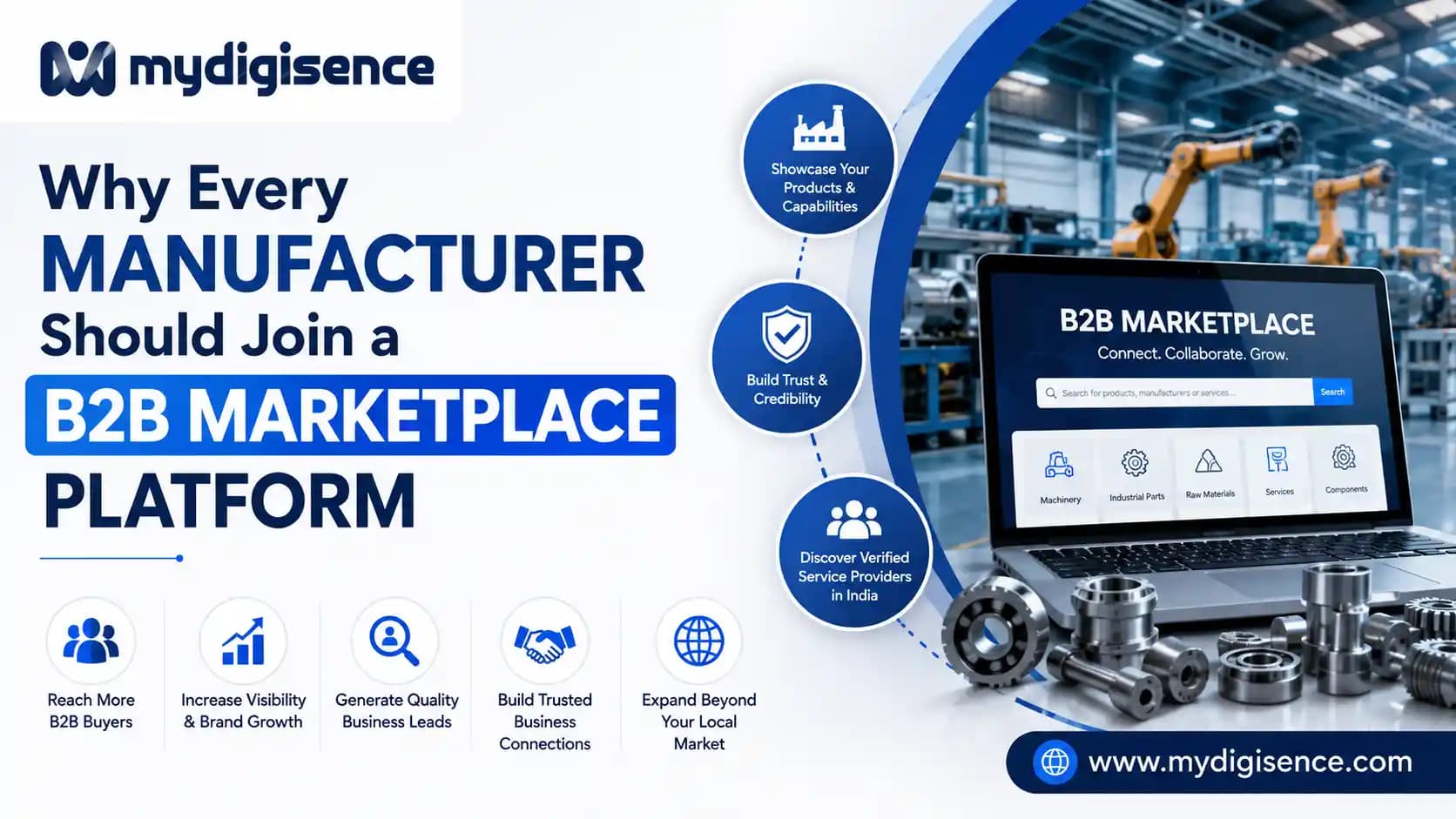
Why Every Manufacturer Should Join a B2B Marketplace Platform
Discover why manufacturers should join a B2B marketplace platform to increase visibility, generate leads, reach buyers, and grow with MyDigiSence.
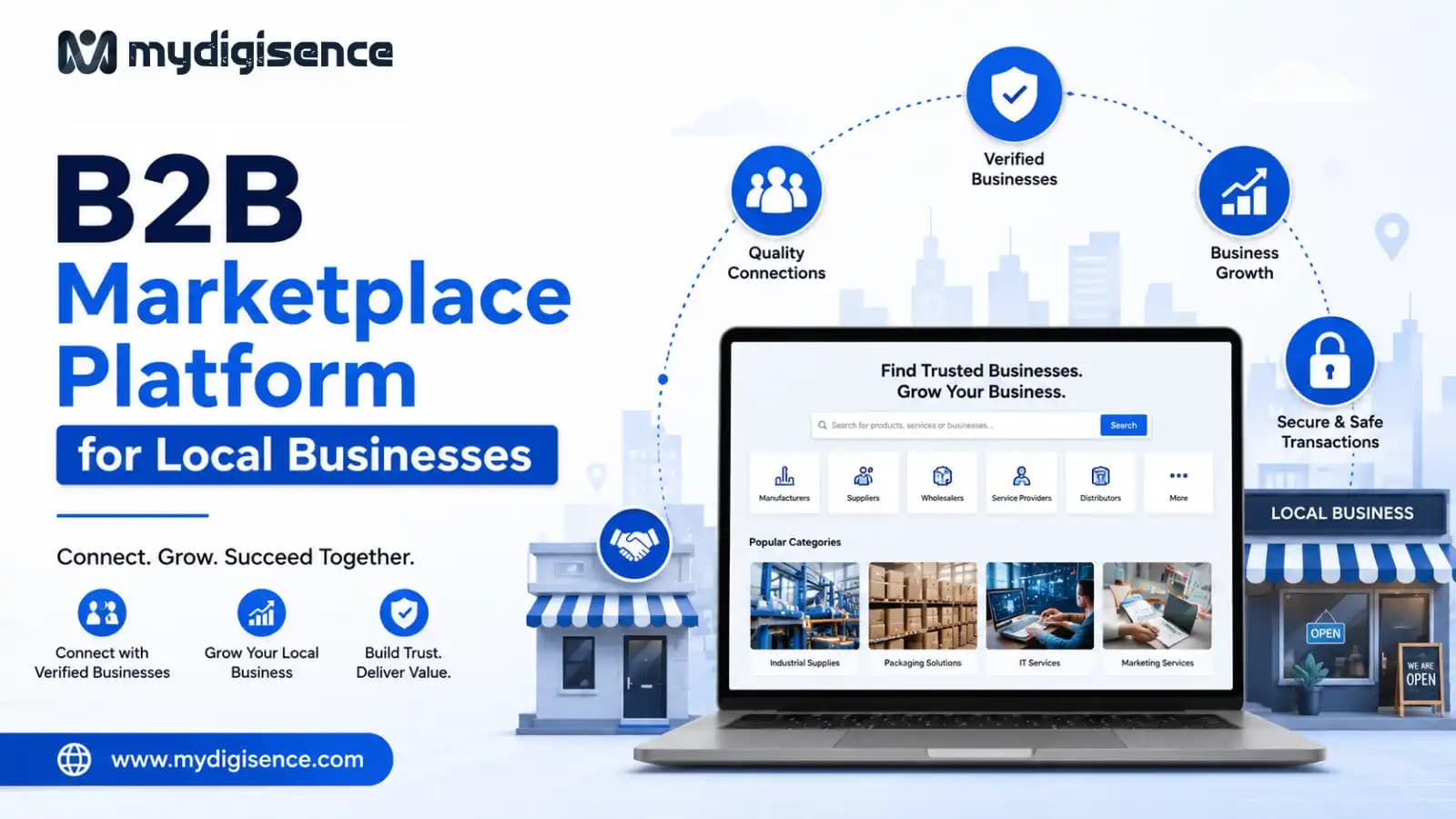
B2B Marketplace Platform for Local Businesses
Local businesses increasingly use digital marketplaces to find customers, promote their services, and build relationships with other businesses.