
How to Sell Wholesale Products Through a B2B Marketplace
Learn how to sell wholesale products through a B2B marketplace with practical tips for creating product listings, setting MOQ and pricing, attracting buyers, generating inquiries, and building long-term B2B relationships.
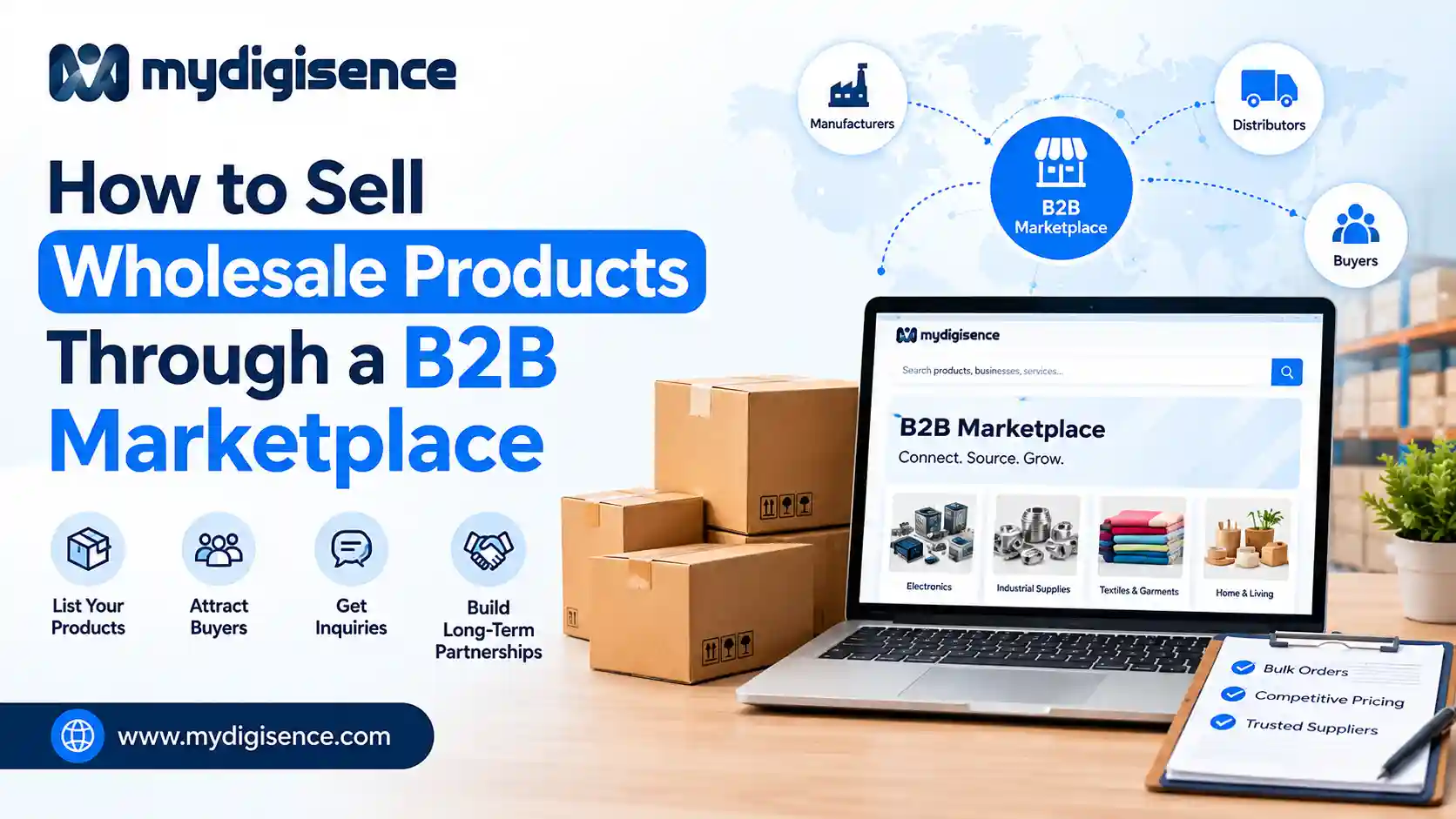
Selling wholesale products through a B2B marketplace can help manufacturers, wholesalers, suppliers, and distributors reach business buyers beyond their existing network. Instead of depending only on offline sales, distributors, referrals, or trade exhibitions, businesses can showcase their products online and connect with retailers, resellers, procurement teams, and other companies looking for bulk supplies.
The key to successful wholesale selling is not simply uploading products. Sellers need accurate product information, clear wholesale pricing, suitable minimum order quantities (MOQs), a complete business profile, professional images, and quick responses to buyer inquiries. Current B2B marketplace models commonly support product discovery, supplier comparison, inquiries, quotations, and direct buyer-seller communication.
AI Overview: How Do You Sell Wholesale Products Through a B2B Marketplace?
To sell wholesale products through a B2B marketplace, create a complete business profile, select the right product categories, upload detailed product listings, provide wholesale pricing or quotation options, clearly mention MOQ and specifications, use professional product images, and respond quickly to buyer inquiries. Sellers should regularly update their listings and focus on building trust with accurate business information. Platforms such as MyDigiSence can help businesses showcase their products and services online, improve business visibility, and connect with potential B2B buyers.
What Is Wholesale Selling on a B2B Marketplace?
Wholesale selling means offering products in larger quantities to other businesses rather than primarily selling individual products to consumers.
Typical wholesale buyers include:
Retailers
Distributors
Wholesalers
Resellers
Importers
Exporters
Manufacturers
Procurement teams
Corporate buyers
A B2B marketplace provides a digital environment where these buyers can search for products, evaluate suppliers, send inquiries, request quotations, and start business discussions.
Unlike a traditional online business directory, which may mainly help users find company information, a B2B marketplace can provide a more active buying and selling environment through product listings, inquiries, supplier profiles, and business connections.
1. Choose the Right B2B Marketplace
The first step is selecting a marketplace that matches your products and target customers.
Before joining, consider:
Does the platform serve your industry?
Are your target buyers active there?
Can you create detailed product listings?
Does it support business inquiries?
Can you showcase your company profile?
Is the platform suitable for wholesale quantities?
Does it provide useful search and category features?
A marketplace should help your products reach relevant businesses rather than simply giving you another place to publish a company name.
2. Create a Complete Business Profile
Your business profile creates the foundation for selling wholesale online.
Include important information such as:
Business name
Company description
Product categories
Manufacturing or sourcing capabilities
Business location
Contact information
Years of experience
Certifications, where applicable
Industries served
Product images
Service areas
A complete profile gives buyers more information when comparing suppliers. Some B2B marketplaces specifically emphasize complete supplier profiles because buyers use business details, categories, certifications, and other information when filtering and evaluating sellers.
3. Add Detailed Wholesale Product Listings
Do not upload a product with only its name and one photograph.
A strong wholesale listing should explain exactly what you are selling.
Include:
Product name
Product category
Product description
Material or composition
Size and dimensions
Available variants
Packaging details
MOQ
Wholesale price or quotation availability
Product images
Delivery or service area
Relevant specifications
For example, instead of writing "Cotton T-Shirts Available," provide useful information such as fabric type, available sizes, colors, MOQ, packaging, customization options, and intended buyer type.
The more useful the listing is, the easier it becomes for a potential buyer to determine whether the product matches their requirement.
4. Set a Practical Minimum Order Quantity
MOQ is particularly important in wholesale selling.
Your minimum order quantity tells buyers how much they need to purchase to start an order.
For example:
MOQ: 100 units
or
MOQ: 500 kg
or
MOQ: 10 cartons
The right MOQ depends on your production capacity, packaging, shipping costs, product type, and target customers.
Clearly displaying MOQ can save time because buyers can immediately understand whether your business is suitable for their purchasing requirements.
5. Provide Clear Wholesale Pricing
Wholesale buyers need to understand the commercial side of a product before moving forward.
Depending on your business model, you can provide:
Fixed wholesale price
Price range
Tiered pricing
"Request a Quote" option
Price based on quantity
Customized pricing for large orders
For example:
Quantity | Wholesale Price |
|---|---|
100–499 units | ₹X per unit |
500–999 units | ₹X per unit |
1,000+ units | ₹X per unit |
If pricing depends on specifications, location, customization, or quantity, clearly tell buyers that they can request a quotation.
6. Use Professional Product Images
Product images are important because buyers cannot physically inspect the product when they first discover it online.
Use clear images that show:
Front and back views
Product details
Packaging
Different variants
Size or dimensions
Product usage
Manufacturing quality, where appropriate
Avoid blurry, unrelated, or heavily edited images.
For manufacturers, showing the product clearly can make the listing more informative and professional.
7. Write Product Descriptions for Business Buyers
Your description should answer the questions a wholesale buyer is likely to ask.
Instead of focusing only on marketing language, provide practical information.
For example:
"We supply stainless steel kitchen equipment for restaurants, hotels, caterers, and commercial kitchens. Available in multiple sizes with bulk-order support and customized specifications."
This immediately communicates the product, target customers, and business capability.
8. Target the Right Wholesale Buyers
Not every visitor is your ideal customer.
Your goal should be to attract businesses that are actually relevant to your products.
For example:
Garment manufacturer → retailers, fashion distributors, clothing wholesalers
Packaging manufacturer → FMCG companies, manufacturers, retailers
Industrial equipment supplier → factories, contractors, distributors
Food wholesaler → retailers, restaurants, distributors, institutional buyers
Understanding your ideal buyer helps you create better product descriptions and respond more effectively to inquiries.
9. Respond Quickly to Buyer Inquiries
Getting an inquiry is only the beginning.
A buyer may contact multiple suppliers at the same time. A delayed response can reduce your chances of continuing the conversation.
When responding, provide:
Product availability
Price or quotation
MOQ
Delivery timeline
Payment terms, where relevant
Product specifications
Additional information requested by the buyer
A clear and professional response can move the conversation from product discovery to genuine business opportunity.
10. Use the Marketplace to Generate Repeat Business
Wholesale selling is often about relationships rather than one-time transactions.
Once you find a suitable buyer, focus on:
Consistent product quality
Reliable communication
Accurate delivery commitments
Competitive pricing
Professional service
Regular follow-up
A successful wholesale relationship can lead to repeat orders, referrals, and long-term partnerships.
11. Keep Your Product Listings Updated
An outdated listing can create problems.
If a product is discontinued, pricing changes, or a specification is updated, make sure your marketplace profile reflects the change.
Regularly review:
Product availability
Prices
MOQ
Product images
Contact information
Product specifications
Business description
An active and accurate profile gives buyers more confidence when evaluating your company.
12. Build Visibility Beyond a Traditional Online Business Directory
An online business directory can be useful for business discovery, but wholesale sellers need more than basic company information.
A B2B marketplace can bring together:
Business profile + Product listings + Buyer discovery + Inquiries + Supplier communication
This makes the platform more useful for businesses that want to actively promote products and generate B2B opportunities.
For example, a buyer searching for a particular wholesale product can discover suppliers, review their offerings, compare relevant information, and contact businesses that appear suitable.
How MyDigiSence Helps Wholesale Sellers
MyDigiSence provides businesses with a digital platform to showcase their products, services, and professional capabilities.
Wholesale sellers can use their MyDigiSence presence to:
Create a professional business profile
Showcase wholesale products
Improve online business visibility
Present product and service information
Connect with potential business customers
Build a stronger digital presence
For manufacturers, wholesalers, suppliers, and other businesses, the objective should be to create a profile that gives potential buyers enough relevant information to understand the business and start a conversation.
Common Mistakes to Avoid When Selling Wholesale Online
Avoid these common mistakes:
Incomplete Business Profile
A profile with very little information can make your company difficult to evaluate.
Poor Product Information
Buyers need specifications, quantities, pricing information, and other relevant details.
Unclear MOQ
Always communicate minimum order requirements where applicable.
Low-Quality Images
Poor images can make even a good product appear less professional.
Slow Responses
Delayed responses can cause potential buyers to move to another supplier.
Overpromising
Do not promise stock, delivery times, or capabilities that you cannot reliably provide.
Ignoring Existing Buyers
Do not focus only on acquiring new customers. Repeat wholesale buyers can become an important source of long-term revenue.
Conclusion
Selling wholesale products through a B2B marketplace requires more than uploading a product and waiting for buyers. Successful sellers create complete business profiles, publish detailed product listings, clearly communicate MOQ and pricing, use professional images, target relevant buyers, and respond quickly to inquiries.
A marketplace should become part of your overall B2B sales strategy rather than simply another online listing.
For manufacturers, wholesalers, suppliers, and distributors, MyDigiSence provides an opportunity to build a professional digital presence, showcase products and services, and connect with businesses looking for relevant products and solutions.
Frequently Asked Questions
Can I sell wholesale products on a B2B marketplace?
Yes. Manufacturers, wholesalers, suppliers, distributors, and other businesses can use B2B marketplaces to showcase products and connect with potential business buyers.
What information should I include in a wholesale product listing?
Include the product name, description, specifications, images, MOQ, pricing or quotation details, packaging information, availability, and other information relevant to wholesale buyers.
How do I get wholesale buyers on a B2B marketplace?
Create a complete business profile, publish detailed product listings, use relevant categories and keywords, maintain accurate information, and respond quickly to buyer inquiries.
Should I display wholesale prices?
If your pricing is stable, displaying a wholesale price or price range can make the listing more transparent. If pricing varies according to quantity, specifications, or location, provide a quotation option instead.
Is an online business directory the same as a B2B marketplace?
No. An online business directory primarily helps users discover businesses and their information, while a B2B marketplace can provide additional tools for product discovery, inquiries, supplier connections, and business transactions.
How can MyDigiSence help wholesale sellers?
MyDigiSence helps businesses establish a digital presence where they can showcase products and services, present their business information, improve discoverability, and connect with potential B2B opportunities.
Written by
Shivam Thakur
Sep 21, 2026
More from the blog
How B2B Marketplace Platforms Help Generate Leads
Learn how B2B marketplace platforms generate qualified business leads through buyer inquiries, profile optimization, SEO visibility, and lead conversion. Discover how My DigiSence helps businesses grow.
Is Listing on a B2B Marketplace Really That Important for SMEs Today?
Is listing on a B2B marketplace really important for SMEs today? Discover how a business listing can help small and medium businesses improve visibility, reach potential buyers, generate inquiries, and grow their market presence online.